According to a recent Nonprofit report, nearly 72% of nonprofits rely on CRM systems to manage donor relationships and track engagement, highlighting how critical technology has become for modern fundraising operations.
However, despite this adoption, many organizations still operate with disconnected systems using Salesforce for nonprofits to manage donor data while relying on QuickBooks for nonprofit accounting to handle financial records.
According to recent nonprofit CRM adoption statistics, this lack of integration often leads to data silos, manual reconciliation, and reporting inconsistencies that directly impact donation tracking and transparency.
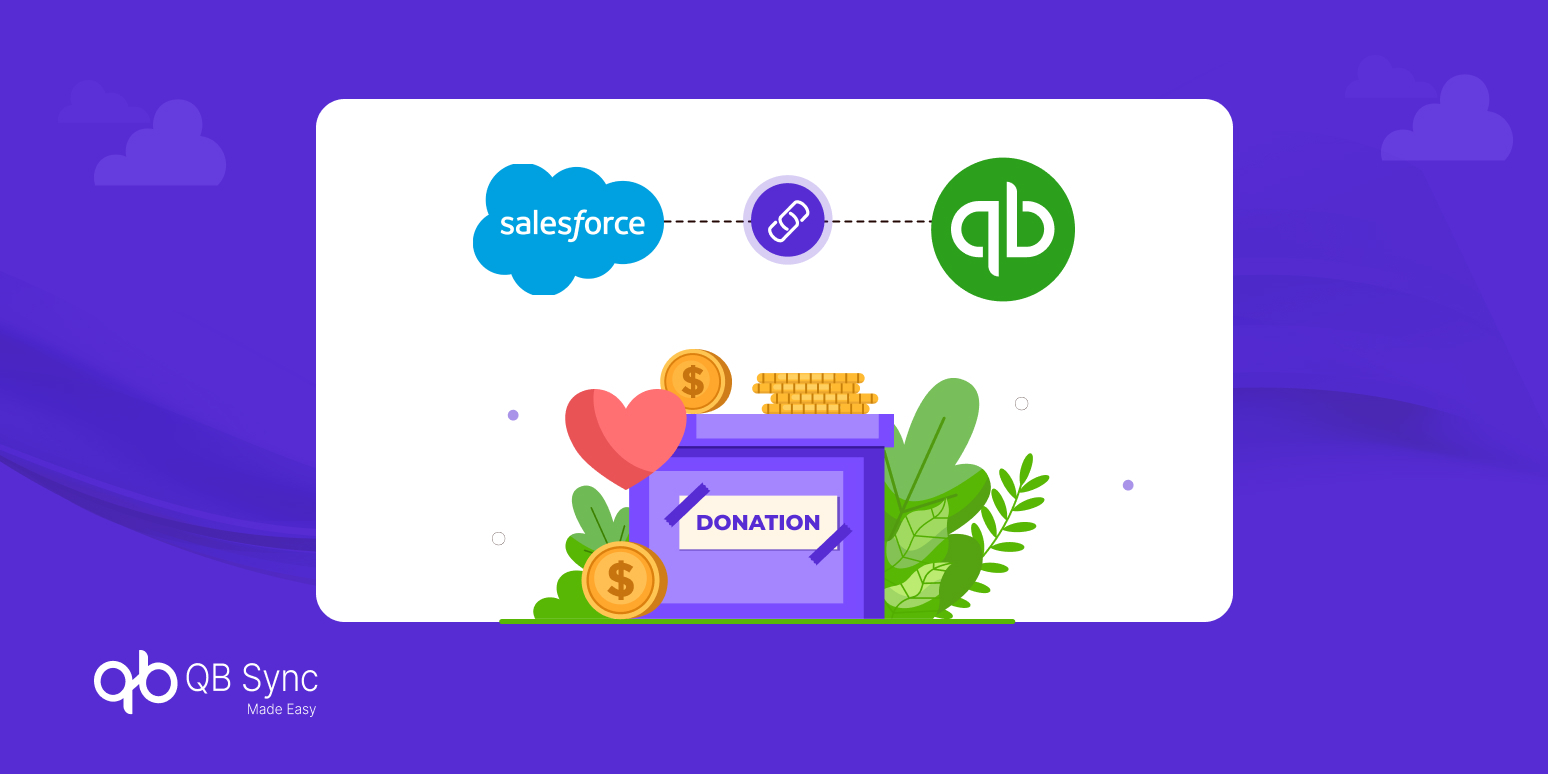
Donation tracking is at the heart of every nonprofit’s success. Whether it’s managing one-time contributions, recurring donations, or grant funding, organizations need accurate, real-time visibility into their financial data. This is where QuickBooks Salesforce integration becomes essential. By connecting Salesforce and QuickBooks, nonprofits can automate donation tracking, eliminate manual work, and ensure every contribution is accurately recorded across systems.
In this blog, we’ll explore why nonprofits need Salesforce QuickBooks integration for better donation tracking, how it works, and how it helps organizations improve transparency, efficiency, and donor trust.
The Challenge of Donation Tracking Without Integration
Nonprofits manage a high volume of financial transactions across multiple campaigns, events, and donor channels. While Salesforce for nonprofits helps track donor engagement, donation records often need to be manually entered into QuickBooks for charities for accounting purposes.
This disconnected workflow leads to several challenges. First, teams spend significant time duplicating data between systems. Second, errors can occur when donation details are entered incorrectly. Third, financial reports may not align with fundraising data, creating confusion during audits or reporting.
Without proper QuickBooks donation tracking integration, organizations often lack a single, reliable view of their financial and donor data. This makes it difficult to measure campaign success and maintain transparency with stakeholders.
What is Salesforce-QuickBooks Integration for Nonprofits?
To solve these challenges, nonprofits are adopting Salesforce QuickBooks integration, which connects CRM and accounting systems into a unified ecosystem.
This integration allows data to flow automatically between Salesforce for nonprofits and QuickBooks for nonprofit accounting. Donor records, donations, invoices, and payment updates sync in real time, ensuring both systems remain aligned.
For example, when a donation is recorded in Salesforce, the integration can automatically create a corresponding financial transaction in QuickBooks. Similarly, payment updates in QuickBooks reflect instantly in Salesforce.
This seamless connection ensures that donation tracking is accurate, automated, and consistent across both platforms, eliminating the need for manual reconciliation.
Why Better Donation Tracking Matters for Nonprofits
Accurate donation tracking is more than just a financial requirement, it directly impacts donor relationships, compliance, and organizational growth.
When nonprofits rely on outdated or incomplete data, they risk misreporting donations, missing follow-ups, and losing donor trust. With increasing expectations for transparency, organizations must ensure that every contribution is properly tracked and reported.
By implementing QuickBooks Salesforce integration, nonprofits gain real-time insights into donation activity. This allows teams to monitor campaign performance, track donor contributions, and generate accurate reports for stakeholders.
Better tracking also enables organizations to identify trends, optimize fundraising strategies, and improve donor retention.
Key Ways Salesforce-QuickBooks Integration Improves Donation Tracking
Now that we understand the importance of accurate tracking, let’s explore how Salesforce and QuickBooks integration directly improves donation management.
1. Real-Time Donation Synchronization
One of the biggest advantages of QuickBooks Salesforce integration is real-time data synchronization between systems.
When a donation is recorded in Salesforce, it is automatically reflected in QuickBooks. This ensures that financial records are always up to date without manual intervention.
Real-time synchronization eliminates delays and allows both fundraising and finance teams to work with accurate data, improving overall efficiency.
2. Automated Financial Record Creation
Manual data entry is one of the most time-consuming aspects of donation tracking. Without integration, teams must recreate donation records in both systems.
With Salesforce QuickBooks integration, donation data flows automatically into QuickBooks, creating financial records instantly. This reduces administrative workload and ensures consistency across systems.
Automation not only saves time but also minimizes errors, which is critical for maintaining accurate financial reports.
3. Unified Donor and Financial Data
Disconnected systems often lead to fragmented data, where donor information and financial records exist separately.
By integrating Salesforce and QuickBooks, nonprofits can create a unified view of donor activity and financial transactions. This allows teams to see complete donor histories, including contributions, invoices, and payment status, in one place.
This unified data improves decision-making and helps organizations better understand donor behavior.
4. Improved Financial Transparency and Reporting
Transparency is a key priority for nonprofits, especially when reporting to donors, board members, and regulatory bodies.
With QuickBooks for nonprofits free or paid versions integrated with Salesforce, organizations can generate accurate financial reports that align with fundraising data. This ensures that donation records match accounting reports, reducing discrepancies.
Improved reporting builds trust with stakeholders and supports compliance requirements.
5. Better Donor Engagement and Retention
Accurate donation tracking enables nonprofits to engage donors more effectively.
When teams have access to real-time financial data within Salesforce for nonprofits, they can personalize communication, acknowledge contributions promptly, and follow up on recurring donations.
This level of engagement helps strengthen donor relationships and improves retention rates over time.
Role of Automation in Modern Nonprofit Operations
Automation is transforming how nonprofits manage operations, especially in donation tracking and financial management.
With Intuit donation tracking tools like QuickBooks integrated with Salesforce, organizations can automate repetitive tasks such as data entry, reconciliation, and reporting. This allows teams to focus on strategic activities like fundraising and donor engagement.
Automation also ensures that data remains accurate and up to date, which is essential for scaling nonprofit operations in 2026 and beyond.
As more nonprofits adopt digital tools and attend events like Nonprofit Dreamin, the focus on automation and integration continues to grow.
Choosing the Right QuickBooks Salesforce Integration Solution
While the benefits of integration are clear, selecting the right solution is critical for success.
Nonprofits should look for integration tools that offer:
- Real-time data synchronization
- Flexible data mapping between systems
- Automated donation and payment tracking
- Secure and reliable data transfer
- Scalability for growing organizations
The right QuickBooks Salesforce integration solution ensures that nonprofits can fully leverage automation while maintaining data accuracy and security.
Donation tracking is one of the most critical functions for nonprofit organizations. However, managing it across disconnected systems can lead to inefficiencies, errors, and limited visibility.
By implementing QuickBooks Salesforce integration, nonprofits can automate donation tracking, unify financial and donor data, and improve transparency across operations.
Integrating Salesforce for nonprofits with QuickBooks for charities not only simplifies financial management but also empowers organizations to build stronger donor relationships and make data-driven decisions.
In 2026, nonprofits that adopt integration and automation will be better equipped to scale their impact, improve donor trust, and achieve long-term success.