
How do Healthtech Companies Benefit from a Quickbooks Salesforce Integration
Nearly 73% of healthcare organizations have increased their investment in digital health technologies, including EHR systems, automation tools, and cloud-based platforms to improve operational efficiency and patient outcomes. (Source: Deloitte 2025 Global Health Care Outlook)
This rapid digital adoption highlights a critical shift, but also exposes a major gap. While many healthtech companies rely on Salesforce Health Cloud, EHR systems, and automation tools, their financial operations often remain siloed in accounting platforms like QuickBooks.
This disconnect between clinical, operational, and financial systems leads to delays, billing errors, and lack of real-time visibility. That’s why Salesforce QuickBooks integration for healthcare is becoming essential.
By connecting CRM, EHR, and accounting systems, healthtech companies can streamline workflows, automate processes, and gain complete control over their data.
In this blog, we’ll explore how integrating Salesforce and QuickBooks transforms healthcare operations, improves financial accuracy, and enables scalable growth for healthtech companies.
Understanding the Need for Salesforce QuickBooks Integration in Healthcare
Healthcare organizations operate in a complex ecosystem where patient data, billing, compliance, and financial reporting must align seamlessly. However, many companies still use separate systems for CRM, EHR, and accounting.
This is where Salesforce health cloud integration combined with quickbooks for healthcare becomes critical. Without integration, teams struggle with duplicate data entry, inconsistent records, and delayed reporting.
By integrating Salesforce with QuickBooks, healthtech companies can create a unified system where patient interactions, billing data, and financial records are automatically synchronized. This ensures better accuracy and saves time across departments.
Key Challenges Faced by Healthtech Companies Without Integration
Before understanding the benefits, it’s important to identify the gaps that exist without integration. These challenges directly impact efficiency and decision-making.
1. Disconnected Patient and Financial Data
When Salesforce EHR integration and accounting systems are not connected, billing teams lack real-time access to patient data. This often results in incorrect invoices or delays in processing payments.
2. Manual Data Entry and Errors
Using separate systems forces teams to manually transfer data between platforms. This increases the risk of human errors and affects financial accuracy.
3. Inefficient Medical Billing Processes
Without quickbooks for medical billing integration, organizations struggle to manage invoices, insurance claims, and payments efficiently.
4. Lack of Real-Time Insights
Disconnected systems prevent leadership from accessing unified reports, making it harder to track revenue, expenses, and patient-related financial metrics.
How Salesforce QuickBooks Integration Works in Healthtech
To understand its benefits, it’s important to see how the integration actually functions within a healthcare ecosystem.
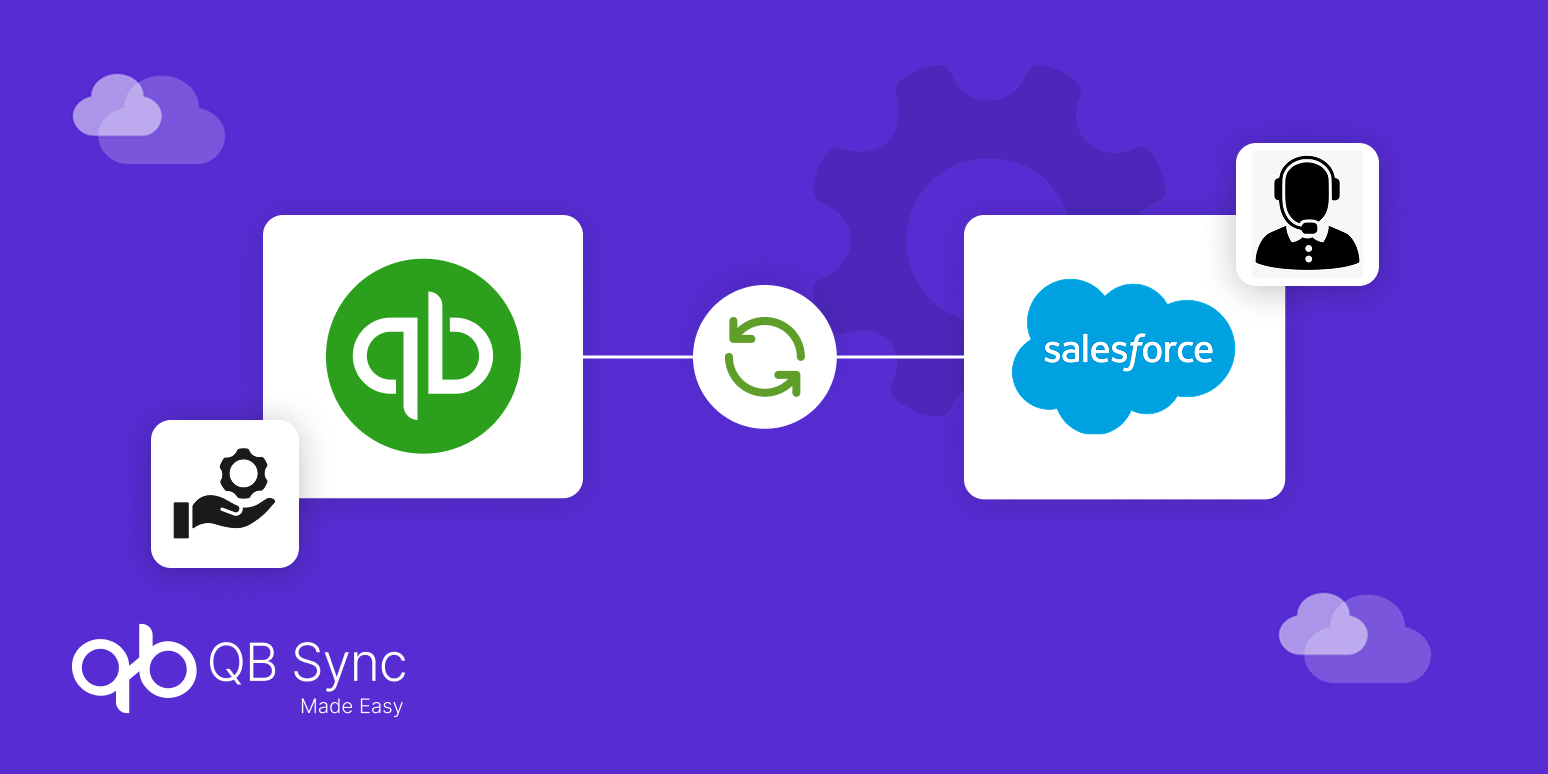
The integration connects Salesforce Health Cloud, EHR systems, and QuickBooks through APIs such as the Salesforce health cloud API, enabling seamless data flow between platforms.
Here’s how it works:
- Patient data from Salesforce EHR syncs with billing details in QuickBooks
This ensures invoices are generated based on accurate patient records - Financial updates from QuickBooks reflect in Salesforce
Teams get real-time visibility into payments and outstanding balances - Automated workflows reduce manual intervention
This improves efficiency and reduces operational costs
This connected ecosystem forms the foundation for automation and better decision-making.
Top Benefits of Salesforce QuickBooks Integration for Healthtech Companies
Once systems are connected, the impact becomes visible across operations, finance, and patient management.
Improved Financial Accuracy and Compliance
Integration ensures that all financial data is synchronized automatically. This reduces discrepancies and helps healthcare companies stay compliant with financial regulations.
Faster and More Efficient Billing
With Quickbooks data sync, invoices are generated and updated automatically based on real-time data from Salesforce. This speeds up the billing cycle and improves cash flow.
Enhanced Patient Experience
Accurate billing and faster processing lead to better patient satisfaction. Patients receive correct invoices and timely updates, improving trust in healthcare services.
Centralized Data Management
By integrating Salesforce health automation tools with QuickBooks, organizations can manage both patient and financial data in one place, improving visibility and coordination.
Scalable Operations for Growth
As healthtech companies grow, managing data across systems becomes complex. Integration allows seamless scaling without increasing operational workload.
Role of Salesforce Health Cloud and EHR Integration
Healthcare organizations rely heavily on EHR systems to manage patient records. However, without financial integration, these systems remain incomplete.
With Salesforce health cloud integration and Salesforce EHR integration, patient data can directly influence billing and financial processes. This ensures that every treatment, service, or consultation is accurately reflected in invoices.
Additionally, using Salesforce health cloud API, organizations can customize integrations to meet their specific operational needs, making the system more flexible and efficient.
Use Cases: Real-World Applications in Healthtech
To better understand the impact, let’s look at practical use cases.
Automated Medical Billing
Healthcare providers can automatically generate invoices in QuickBooks based on patient data from Salesforce, reducing manual effort.
Insurance and Claims Processing
Integrated systems ensure accurate data sharing between patient records and billing, improving claim approval rates.
Revenue Tracking and Reporting
Finance teams can track revenue in real time using unified dashboards, enabling better forecasting and decision-making.
Future of Healthcare Automation with Integration
The future of healthtech lies in automation and data-driven decision-making. As AI and cloud technologies continue to evolve, integration between systems will become even more critical.
Combining Salesforce health automation with financial systems like QuickBooks enables organizations to move toward predictive analytics, automated workflows, and improved patient outcomes.
This makes integration not just a technical upgrade, but a strategic necessity.
Healthtech companies are rapidly adopting digital solutions, but true efficiency comes from connecting these systems. Salesforce QuickBooks integration for healthcare bridges the gap between patient management and financial operations.
By integrating Salesforce, EHR systems, and QuickBooks, organizations can eliminate manual processes, improve billing accuracy, and gain real-time insights. This not only enhances operational efficiency but also builds trust with patients and stakeholders.
For healthtech companies aiming to scale and innovate, integration is no longer optional, it’s essential.