Nonprofits today operate in an increasingly data-driven environment where donor management, financial transparency, and operational efficiency are critical for long-term impact. Many organizations rely on Salesforce for nonprofits to manage donor relationships and engagement, while QuickBooks for nonprofit accounting is widely used to track donations, expenses, and financial reporting.
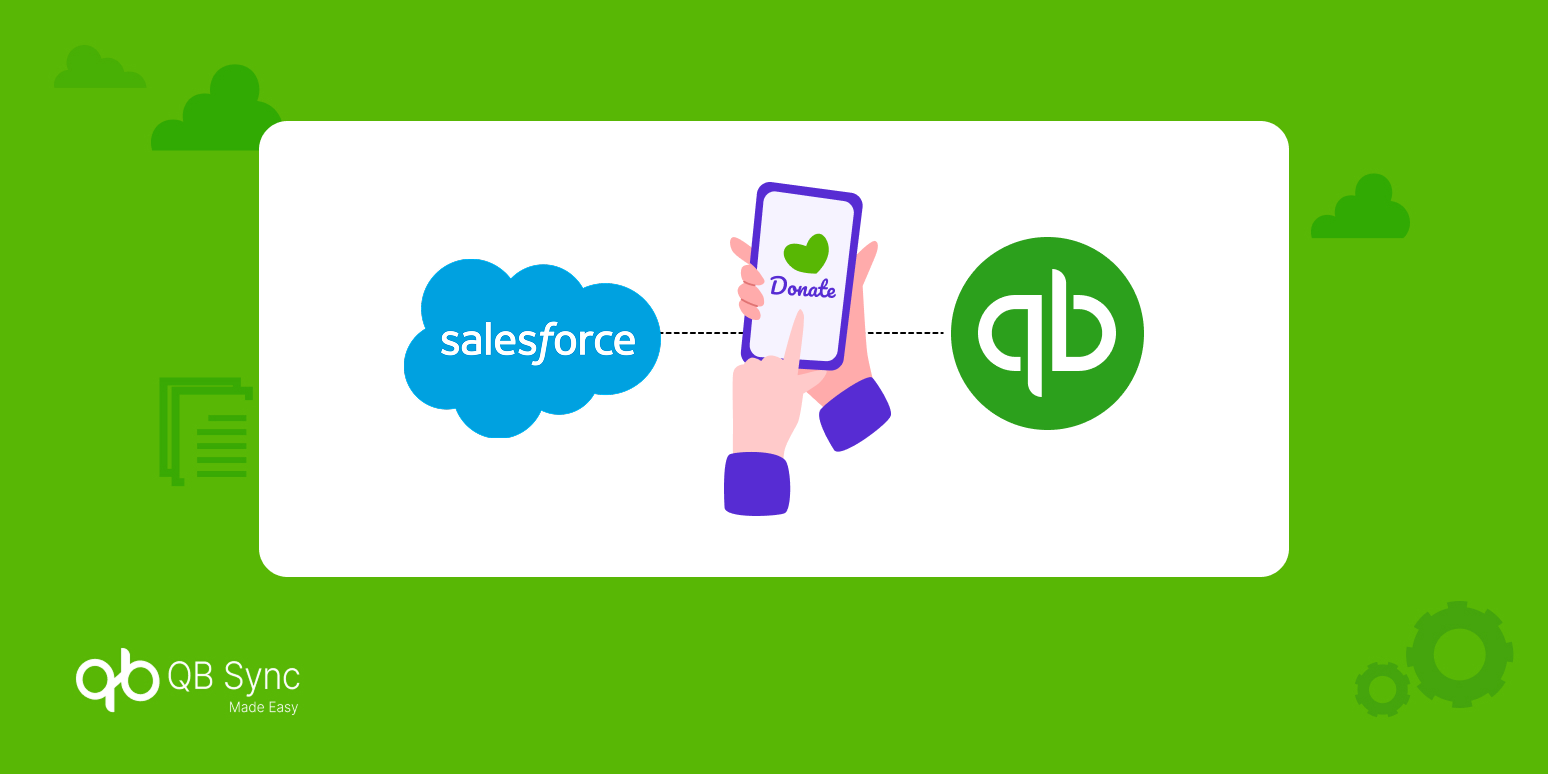
However, when these systems operate separately, teams often face data silos, manual data entry, and reporting delays. This is where QuickBooks Salesforce integration becomes essential. By connecting Salesforce Nonprofit Cloud with QuickBooks Online for nonprofits, organizations can create a seamless flow of data between fundraising, donor management, and financial operations.
In this blog, we’ll explore the top 5 benefits of Salesforce-QuickBooks integration for nonprofits in 2026, how it improves donor management and financial accuracy, and why many nonprofit organizations are adopting this integration to streamline operations and improve transparency.
Top 5 Benefits of Salesforce-QuickBooks Integration for Nonprofits
Now that we understand how the integration works, let’s explore the five most impactful benefits nonprofits experience when connecting Salesforce and QuickBooks.
1. Unified Donor and Financial Data
One of the biggest benefits of QuickBooks Salesforce integration is the ability to unify donor information and financial data across both systems.
Without integration, donor information may exist in Salesforce while payment records exist separately in QuickBooks. This separation can create confusion when teams try to reconcile donation records with financial reports.
With Salesforce-QuickBooks integration, donor accounts, contributions, invoices, and payment records are synchronized automatically. This ensures that both fundraising and accounting teams access the same information, improving transparency and reducing data discrepancies.
As a result, nonprofits gain a complete view of donor relationships and financial transactions, which is essential for effective fundraising and reporting.
2. Automated Donation and Payment Tracking
Nonprofits process hundreds or even thousands of donations across campaigns, events, and recurring giving programs. Manually recording these transactions in multiple systems can slow down operations.
By integrating QuickBooks online for nonprofits with Salesforce, organizations can automate donation tracking. When a donation is recorded in Salesforce, the corresponding financial entry can automatically appear in QuickBooks.
This automation reduces administrative workload and ensures that donation records are always accurate. It also allows finance teams to generate reports without waiting for manual updates.
In 2026, automation like this is becoming a key advantage for nonprofits aiming to scale their fundraising programs efficiently.
3. Better Financial Reporting and Transparency
Transparency is essential for nonprofit organizations, especially when reporting to donors, board members, and regulatory bodies.
When Salesforce and QuickBooks operate independently, financial reports may not reflect the latest fundraising activity. Teams must manually combine reports from both systems to get a complete picture.
With Salesforce-QuickBooks integration, financial data and donor activity remain aligned in real time. This enables leadership teams to generate accurate reports that combine fundraising performance with financial outcomes.
Better reporting not only improves internal decision-making but also builds trust with donors and stakeholders.
4. Improved Operational Efficiency for Teams
Manual data entry is one of the biggest operational challenges nonprofits face when using disconnected systems.
Fundraising teams often update donor interactions in Salesforce nonprofit cloud, while accounting teams manually recreate those transactions in QuickBooks for nonprofit accounting. This duplication wastes time and increases the risk of errors.
A properly configured QuickBooks Salesforce integration eliminates repetitive tasks by syncing data automatically between the systems. This allows teams to focus on strategic activities such as donor engagement and financial planning.
The result is faster workflows, reduced administrative overhead, and improved team productivity.
5. Real-Time Visibility into Donations and Financial Health
Real-time insights are essential for nonprofit leaders making decisions about fundraising campaigns, budgeting, and program funding.
When Salesforce for nonprofits and QuickBooks operate separately, leadership teams may rely on outdated reports or incomplete data.
By implementing Salesforce-QuickBooks integration for nonprofits, organizations gain real-time visibility into donations, invoices, payments, and financial performance. This helps leadership teams monitor fundraising progress and financial health simultaneously.
With accurate and up-to-date insights, nonprofits can make better decisions that support long-term mission success.
Why Nonprofits Need Salesforce-QuickBooks Integration
Nonprofit organizations handle multiple workflows simultaneously—managing donors, tracking fundraising campaigns, issuing receipts, and maintaining financial records. While Salesforce for nonprofits excels at relationship management and engagement tracking, QuickBooks for nonprofit accounting ensures accurate financial reporting and compliance.
Without integration, teams often spend hours manually transferring information between these systems. For example, donation records tracked in Salesforce must be manually recreated in QuickBooks to generate financial reports. Over time, this creates duplicate data, reporting inconsistencies, and operational inefficiencies.
By implementing Salesforce and QuickBooks integration, nonprofits can automatically synchronize donor records, donations, invoices, and financial transactions. This creates a single source of truth, allowing fundraising and finance teams to work with the same real-time information.
This connection between donor engagement and financial systems is exactly why the benefits of Salesforce-QuickBooks integration for nonprofits are becoming increasingly important in 2026.
How Salesforce and QuickBooks Work Together for Nonprofits
Before exploring the benefits, it’s important to understand how Salesforce-QuickBooks integration for nonprofits works in practice.
When the systems are connected, key data objects synchronize automatically. For example, donor accounts and contacts in Salesforce can sync with customer records in QuickBooks. Donation transactions recorded in Salesforce fundraising campaigns can generate invoices or payment records in QuickBooks.
This synchronization ensures that fundraising teams track donor engagement in Salesforce, while finance teams manage accounting processes in QuickBooks, without duplicating work.
The result is a unified ecosystem where Salesforce Nonprofit Cloud and QuickBooks Online for nonprofits operate together, enabling better reporting, faster workflows, and improved financial visibility.
Conclusion
As nonprofits continue to adopt digital tools to manage donor relationships and financial operations, QuickBooks Salesforce integration is becoming a critical part of modern nonprofit infrastructure.
By connecting Salesforce Nonprofit Cloud with QuickBooks Online for nonprofits, organizations can eliminate manual data entry, improve financial transparency, and create a unified view of donor activity and accounting data.
The benefits of Salesforce-QuickBooks integration for nonprofits go far beyond operational efficiency. They enable better fundraising insights, stronger financial reporting, and improved collaboration between teams.
For nonprofit organizations aiming to scale their impact in 2026 and beyond, integrating Salesforce and QuickBooks is a powerful step toward building a more connected and data-driven ecosystem.